
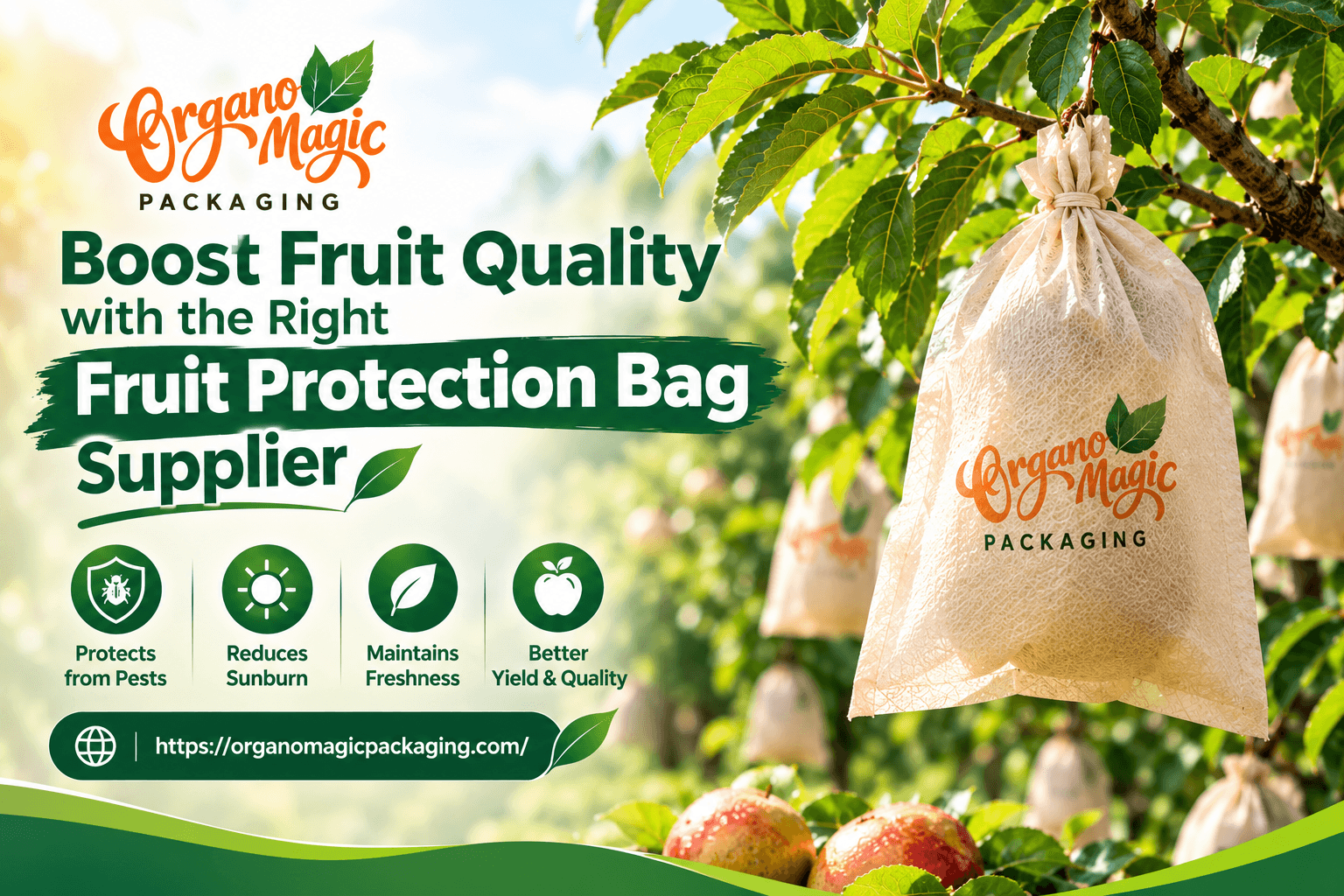
Boost Fruit Quality with the Right Fruit Protection Bag Supplier
Maintaining fruit quality throughout the growing season requires more than proper irrigation, nutrition, and pest management. Developing fruits are exposed to insects, birds, rain, excessive sunlight, dust, and physical damage, all of which can affect their appearance and commercial value. Protective coverings can provide an additional layer of support when selected and applied correctly.
However, choosing the right product is just as important as using one. A reliable Fruit Protection Bag Supplier should understand crop requirements and provide suitable materials, sizes, durability, and consistent quality. This guide explains how growers and agricultural businesses can evaluate protective bags, compare suppliers, reduce purchasing risks, and make practical decisions based on crop conditions and long-term requirements.
The right fruit protection bag supplier provides durable, appropriately sized, breathable coverings that suit the fruit variety and growing environment. Buyers should evaluate material strength, moisture resistance, ventilation, sizing, manufacturing consistency, customization, supply reliability, and overall cost rather than selecting products based only on the lowest price.
What Are Fruit Protection Bags?
Protective fruit coverings are designed to surround developing fruits and create a physical barrier against selected environmental and biological factors. Their effectiveness depends on the material, design, installation method, crop type, and local growing conditions.
Fruit Protection Bags can be used in different agricultural applications where growers want to reduce exposure to external conditions that may cause cosmetic or physical damage. They are particularly useful when fruit appearance and surface quality are important for market acceptance.
The purpose is not to completely isolate the fruit. Instead, a well-designed covering should provide protection while allowing appropriate airflow and moisture management.
Why Is Supplier Selection Important?
A supplier does more than provide a finished product. Product consistency, technical information, production capacity, packaging, and delivery reliability can directly affect agricultural operations.
A poor-quality bag may tear during installation, deteriorate prematurely, or fail to remain securely positioned. Such issues can increase material consumption and labor requirements.
When evaluating a supplier, growers should consider:
- Material strength and construction quality.
- Size, fit, and available customization.
- Moisture tolerance and ventilation.
- Manufacturing consistency between batches.
- Production capacity and delivery reliability.
The objective should be to identify a product that performs appropriately for the intended application rather than simply finding the cheapest quotation.
How Should You Evaluate the Material?
Material selection is one of the most important considerations. Paper-based agricultural coverings should have enough strength to withstand normal handling and outdoor exposure during their intended period of use.
Growers should ask suppliers about the paper grade, construction, durability, moisture behavior, and recommended application conditions. The right specification can vary according to climate, fruit variety, orchard practices, and expected protection duration.
A practical field test can also provide valuable information. Before placing a large order, test samples under actual growing conditions and observe how easily they can be installed, secured, and maintained.
Why Are Size and Ventilation Important?
The covering should accommodate normal fruit development without creating unnecessary pressure or movement. An undersized bag may be unsuitable as the fruit grows, while an oversized product can be harder to secure.
Ventilation is equally important. Agricultural coverings should be designed with the growing environment in mind because excessive moisture accumulation may create undesirable conditions.
Suppliers should therefore be able to explain how their product is intended to balance physical protection with airflow. Buyers should avoid assuming that every protective bag provides identical performance.
How Can Businesses Compare Fruit Protection Bag Manufacturers?
When assessing fruit protection bag manufacturers, look beyond product photographs and price quotations. A professional evaluation should examine manufacturing capability, quality procedures, product specifications, and the supplier's ability to meet repeat orders.
Ask for clear information about dimensions, material characteristics, packaging quantities, storage requirements, and recommended applications. If customization is required, confirm whether the manufacturer can consistently produce the requested specifications.
For commercial growers, supply continuity is especially important. A supplier that cannot maintain adequate stock during peak agricultural periods may create operational difficulties even if its products are technically suitable.
What Common Purchasing Mistakes Should Be Avoided?
One common mistake is choosing solely on unit price. The actual cost of a protective product includes purchasing, transportation, installation labor, replacements, and potential wastage.
Another mistake is selecting a product without considering the specific crop. Different fruits have different sizes, growth patterns, environmental requirements, and protection periods.
Growers should also avoid making decisions based on unverified claims about guaranteed yield increases or financial returns. Protective coverings can support crop-management strategies, but outcomes depend on several factors, including weather, cultivation practices, pest pressure, and post-harvest handling.
What Is the Best Way to Select a Supplier?
A structured procurement process can make supplier selection more reliable. First, define the application clearly, including the fruit variety, approximate quantity, required protection period, and local growing conditions.
Next, shortlist suppliers based on technical information and manufacturing capability. Request samples and conduct a small field evaluation before making a major purchase.
Finally, review commercial factors such as minimum order quantities, lead times, packaging, delivery arrangements, and after-sales communication. Maintaining records of product performance can help businesses make better decisions when reordering.
Expert Insights for Long-Term Purchasing
Experienced agricultural buyers often evaluate suppliers based on consistency rather than a single successful order. A product may perform well in one batch, but long-term value depends on whether the manufacturer can maintain comparable quality across future production.
Documentation can support this process. Keep product specifications, purchase records, batch details, supplier communications, and field observations. These records can help identify recurring issues and provide useful evidence when comparing suppliers.
Storage should also receive attention. Paper-based products should generally be stored according to the manufacturer's recommendations and protected from unnecessary moisture, contamination, and physical damage.
Most importantly, protective coverings should complement broader crop-management practices rather than replace them. Proper irrigation, nutrition, pruning, pest monitoring, disease management, harvesting, and post-harvest handling remain essential to maintaining fruit quality.
Key Takeaways
- Evaluate material quality, durability, size, ventilation, and crop compatibility.
- Compare suppliers according to manufacturing consistency and supply reliability.
- Conduct field trials before committing to large quantities.
- Consider total cost rather than purchase price alone.
- Maintain product and purchasing documentation.
- Avoid unsupported claims about guaranteed yield or profit improvements.
- Treat protective coverings as one part of an integrated crop-management approach.
Conclusion
Fruit quality depends on many factors, but appropriate protective coverings can provide useful support during crop development. Selecting a reliable Fruit Protection Bag Supplier requires careful consideration of material quality, design, durability, ventilation, sizing, manufacturing consistency, and supply capacity.
Growers should test products under real conditions and evaluate their total cost of use before making long-term purchasing decisions. Businesses researching Fruit Protection Bag Paper Manufacturers should focus on documented specifications, practical performance, and consistent manufacturing rather than relying solely on price.
A thoughtful supplier-selection process can help agricultural businesses choose protective solutions that fit their crop requirements while supporting efficient and responsible fruit-production practices.