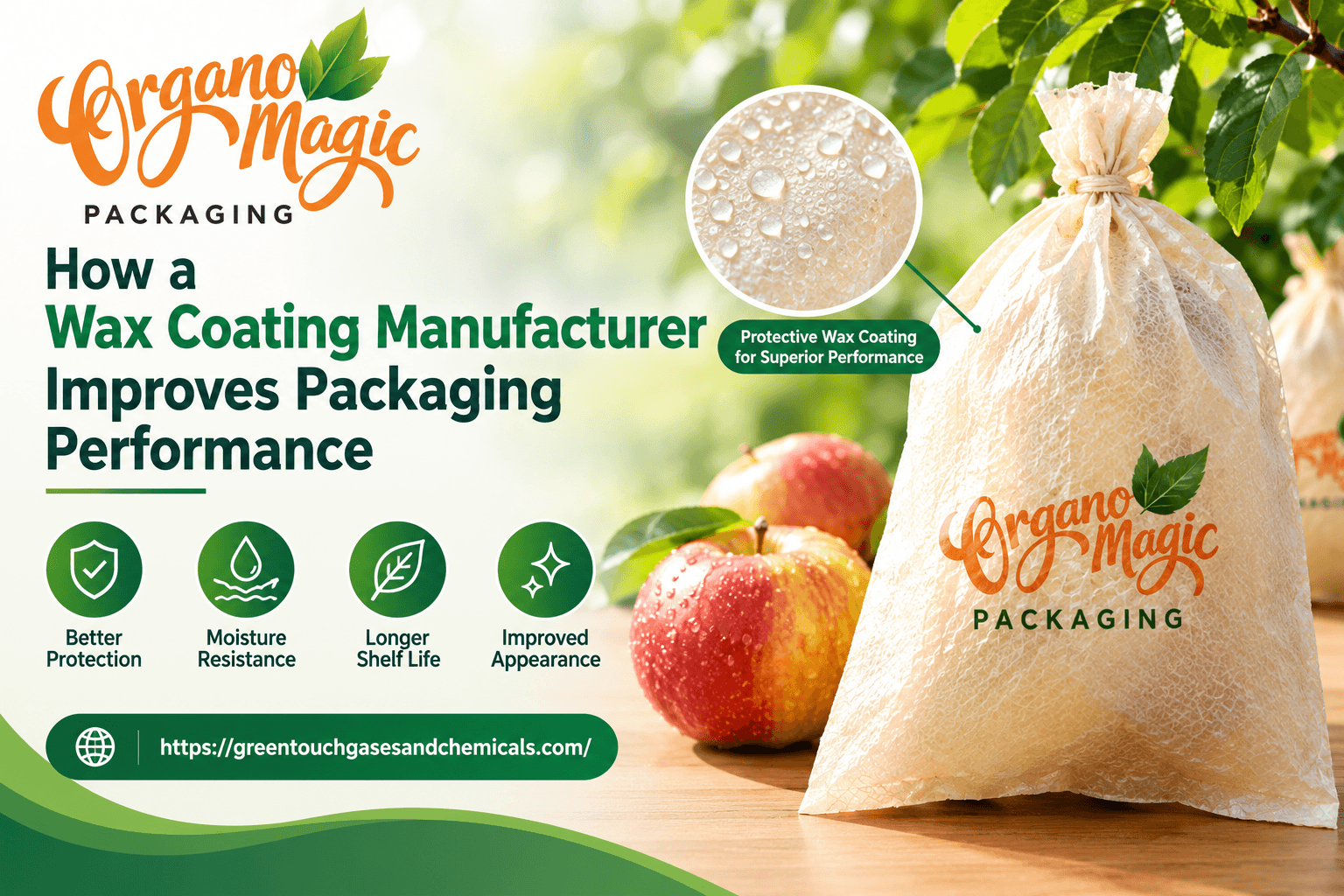
How a Wax Coating Manufacturer Improves Packaging Performance
Packaging plays an important role in protecting products during storage, transportation, and handling. For food and fresh produce, packaging must manage moisture, surface protection, durability, and changing environmental conditions. This is where a wax coating manufacturer can contribute to better packaging performance through carefully formulated coatings and controlled application processes. The right coating can improve resistance to moisture, grease, abrasion, and surface damage while supporting the functional requirements of the packaging material.
A wax coating manufacturer improves packaging performance by developing suitable coating formulations, controlling coating thickness, ensuring consistent application, and testing the finished material. Properly selected wax coatings can improve moisture resistance, durability, and surface protection. For food packaging, manufacturers must also consider applicable food-contact requirements, substrate compatibility, storage conditions, and the specific needs of the packaged product.
What Is Wax Coating in Packaging?
Wax coating is a protective layer applied to materials such as paper, paperboard, cartons, and other compatible substrates. The coating creates a barrier that can help reduce the impact of moisture and other external conditions on the packaging material.
The performance of a coating depends on several factors, including wax type, formulation, coating weight, application temperature, substrate characteristics, and intended use. Therefore, selecting a coating should always begin with understanding the packaging environment rather than choosing a product based only on general claims.
For food-related applications, regulatory compliance is also important. In India, the Food Safety and Standards Authority of India (FSSAI) provides requirements for materials used for food packaging. Businesses should verify that the selected material and coating are appropriate for their specific application.
Why Does Wax Coating Matter for Packaging Performance?
Paper-based packaging can lose strength when exposed to excessive moisture. During transportation and storage, packages may encounter humidity, condensation, friction, temperature changes, and repeated handling.
A properly designed wax coating can help address some of these challenges by improving the surface characteristics of the substrate. Depending on the formulation, it may provide better moisture resistance, surface protection, and resistance to certain forms of handling damage.
However, wax coating should not be considered a universal solution. Packaging performance depends on the complete system, including the substrate, coating, package design, sealing method, storage environment, and product characteristics.
How Does a Wax Coating Manufacturer Improve Packaging?
A technically experienced manufacturer focuses on consistency and application-specific performance rather than simply supplying a coating material.
The process generally involves selecting a suitable wax system, determining the required coating characteristics, optimizing application conditions, and evaluating the finished packaging. Important considerations include adhesion, flexibility, coating uniformity, moisture resistance, temperature behavior, and compatibility with the substrate.
Coating thickness is particularly important. An insufficient coating may not provide the expected protection, while excessive application can affect flexibility, processing, appearance, and material costs. Consistent application therefore helps achieve predictable results.
Testing should also be performed on the actual packaging structure whenever possible. Laboratory testing of the raw coating alone may not accurately represent how the finished package will behave during transportation or storage.
How Does Wax Coating Support Fruit Packaging?
Fresh produce presents unique packaging challenges because fruits and vegetables naturally contain moisture and may experience condensation during storage and transportation. Packaging therefore needs to provide protection while maintaining suitable handling and environmental characteristics.
A Fruit Protection Bag Manufacturer may develop specialized packaging solutions designed around the requirements of particular fruits. Material selection, ventilation, durability, moisture management, and handling conditions all influence the effectiveness of the final packaging.
For example, packaging designed for long-distance transportation may require different characteristics from packaging intended for short-term local distribution. Understanding the supply chain helps manufacturers select appropriate materials and protective treatments.
What Role Does a mango covers manufacturer Play?
Mangoes can experience physical damage during harvesting, sorting, transportation, and handling. Protective covers can help reduce direct contact and provide an additional layer between the fruit and external surfaces.
A mango covers manufacturer should consider fruit characteristics, material strength, ventilation, environmental conditions, and intended storage duration when developing a suitable covering solution.
The objective is not simply to add a protective layer. Instead, the complete packaging system should support product protection throughout the supply chain without creating unnecessary material or handling issues.
What Should Businesses Check Before Choosing a Coating?
Businesses should evaluate technical performance, documentation, consistency, and suitability for the intended application before selecting a coating supplier.
Important checks include:
- Confirm the substrate and intended packaging conditions.
- Review technical specifications and recommended application parameters.
- Request relevant food-contact or regulatory documentation when applicable.
- Test the finished packaging under realistic storage and transportation conditions.
These steps can help reduce performance problems and make supplier comparisons more objective.
What Are the Common Mistakes to Avoid?
One common mistake is selecting a coating only because it offers strong moisture resistance. Packaging requirements are usually more complex, and improving one property does not automatically guarantee overall package performance.
Another mistake is failing to test the coating on the actual substrate. Different paper grades, board structures, application methods, and environmental conditions can produce different results.
Businesses should also avoid assuming that a general “food grade” description is sufficient regulatory evidence. Food-contact suitability depends on the specific formulation, application, food type, and applicable regulations.
Best Practices for Better Packaging Performance
A structured approach can make coating selection more reliable. Start by defining the product requirements, including moisture exposure, temperature, storage duration, transportation conditions, handling frequency, and expected shelf life.
Next, establish measurable performance requirements. Instead of using broad descriptions such as “high protection,” define suitable coating weight, resistance, adhesion, or other relevant technical parameters.
Finally, conduct validation using finished packaging. This provides a more realistic understanding of how the coating performs under actual operating conditions.
Businesses should also maintain technical records, supplier specifications, test results, and batch information. Proper documentation supports quality control and makes it easier to identify the cause of performance variations.
Key Takeaways
- Wax coatings can improve moisture resistance, surface protection, and packaging durability when correctly formulated and applied.
- Packaging performance depends on the interaction between the coating, substrate, application process, product, and storage environment.
- Food-related applications require careful attention to applicable regulatory and food-contact requirements.
- Testing finished packaging provides more practical information than evaluating the coating alone.
- Supplier selection should consider consistency, technical support, documentation, and application suitability.
Conclusion
Effective packaging requires more than selecting a protective material. A reliable wax coating Manufacturer considers the substrate, environmental conditions, application process, regulatory requirements, and final product requirements before recommending a coating solution.
For businesses comparing Top fruit wax coating manufacturers, technical performance and consistency should remain central to the evaluation. Understanding the complete packaging system can help companies choose appropriate materials, reduce avoidable performance issues, and develop packaging that remains functional throughout storage, transportation, and handling.