
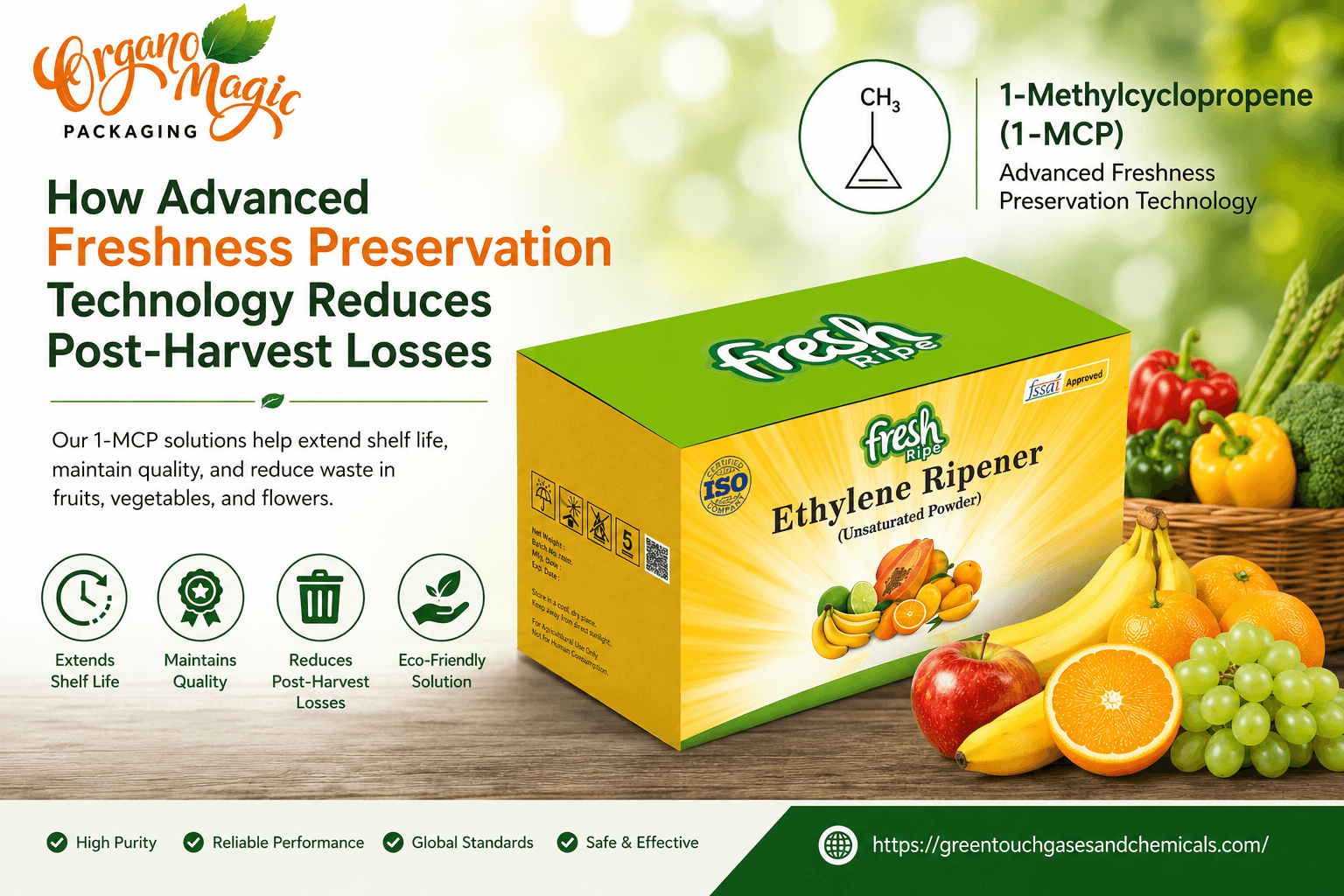
How Advanced Freshness Preservation Technology Reduces Post-Harvest Losses
Post-harvest losses remain one of the biggest challenges in the global fruit and vegetable supply chain. A significant portion of harvested produce never reaches consumers due to premature ripening, spoilage, transportation delays, and inadequate storage conditions. As demand for high-quality fresh produce continues to grow, advanced freshness preservation technologies are becoming essential for growers, exporters, distributors, and retailers. Among the most effective innovations available today is the use of specialized ripening-control solutions developed by a 1-methylcyclopropene manufacturer, helping maintain product quality and extend storage life without compromising freshness.
Fresh fruits naturally continue their biological processes even after harvesting. During storage and transportation, they release gases that accelerate ripening. While ripening is a natural process, excessive speed can lead to softening, discoloration, weight loss, and reduced market value. Modern preservation technologies are designed to slow these processes, allowing produce to remain fresh for longer periods and reducing unnecessary waste throughout the supply chain.
The Role of Advanced Preservation Technologies in Modern Agriculture
Freshness preservation technology focuses on controlling the factors responsible for product deterioration. These include temperature fluctuations, humidity levels, microbial growth, and natural ripening activity. By managing these variables effectively, producers can significantly reduce losses and improve product quality from harvest to consumption.
One of the most widely adopted solutions is 1 mcp for Fruit Preservation. This technology helps delay the natural aging process in fruits by managing the effects of ripening signals. As a result, fruits retain their firmness, color, texture, and nutritional quality for extended periods.
The adoption of advanced preservation systems offers several important benefits:
- Extends the shelf life of harvested produce.
- Reduces spoilage during storage and transportation.
- Maintains product appearance and quality.
- Supports long-distance export operations.
- Minimizes economic losses for growers and distributors.
- Improves customer satisfaction through fresher produce.
- Enhances inventory management and supply chain efficiency.
These advantages make freshness preservation an essential component of modern agricultural operations, particularly for businesses involved in large-scale fruit production and international trade.
Temperature-controlled storage facilities have traditionally been the primary method of preserving produce. While cold storage remains important, it is often more effective when combined with modern ripening-management technologies. This integrated approach provides superior protection against quality degradation and allows businesses to maximize the value of their harvests.
Another important aspect of post-harvest management is reducing waste throughout the supply chain. According to agricultural industry estimates, a considerable percentage of harvested fruits and vegetables are lost before reaching consumers. Such losses affect profitability and contribute to broader sustainability challenges. By implementing advanced preservation methods, companies can significantly lower waste levels while making more efficient use of resources such as water, energy, and labor.
Exporters particularly benefit from freshness preservation technologies because international shipments often require extended transit times. Produce transported across countries or continents may spend weeks in storage and transit. Without proper preservation measures, products can arrive with diminished quality, resulting in financial losses and customer dissatisfaction. Advanced solutions help ensure produce reaches destination markets in optimal condition.
Research and innovation continue to improve preservation techniques, creating more effective and environmentally responsible solutions. Modern agricultural technology providers work closely with growers and supply chain operators to develop systems that align with evolving market requirements. These advancements contribute to improved food security while supporting sustainable agricultural practices.
Businesses seeking reliable preservation solutions often collaborate with a trusted 1 mcp ethylene manufacturer to ensure consistent product performance and compliance with industry standards. Quality assurance and proper application play a critical role in achieving successful preservation outcomes. When used correctly, advanced freshness technologies can deliver measurable improvements in storage performance and overall product quality.
Retailers also benefit from longer-lasting produce. Extended shelf life reduces shrinkage, minimizes inventory losses, and allows stores to offer fresher products to customers. This creates a positive shopping experience while supporting operational efficiency. Consumers increasingly expect fruits and vegetables to remain fresh for longer periods after purchase, making preservation technologies valuable throughout the supply chain.
In addition to economic benefits, reducing post-harvest losses contributes to environmental sustainability. Every unit of produce that reaches consumers instead of being discarded represents more efficient use of agricultural resources. Lower waste levels help reduce the environmental impact associated with food production, transportation, and disposal.
As global populations continue to grow, preserving harvested produce efficiently will become even more important. Advanced technologies provide practical solutions for meeting increasing food demand while minimizing waste and protecting product quality. Their role in modern agriculture is expected to expand as supply chains become more complex and consumer expectations continue to evolve.
Conclusion
Advanced freshness preservation technology has transformed the way fruits and vegetables are stored, transported, and marketed. By slowing quality deterioration and managing natural ripening processes, these solutions help reduce post-harvest losses, improve profitability, and support sustainable agricultural practices. From growers and exporters to retailers and consumers, every participant in the supply chain benefits from improved freshness and reduced waste. As innovation continues to advance, partnering with a reliable 1 methylcyclopropene manufacturer in india can help agricultural businesses enhance product quality and strengthen long-term supply chain performance.