
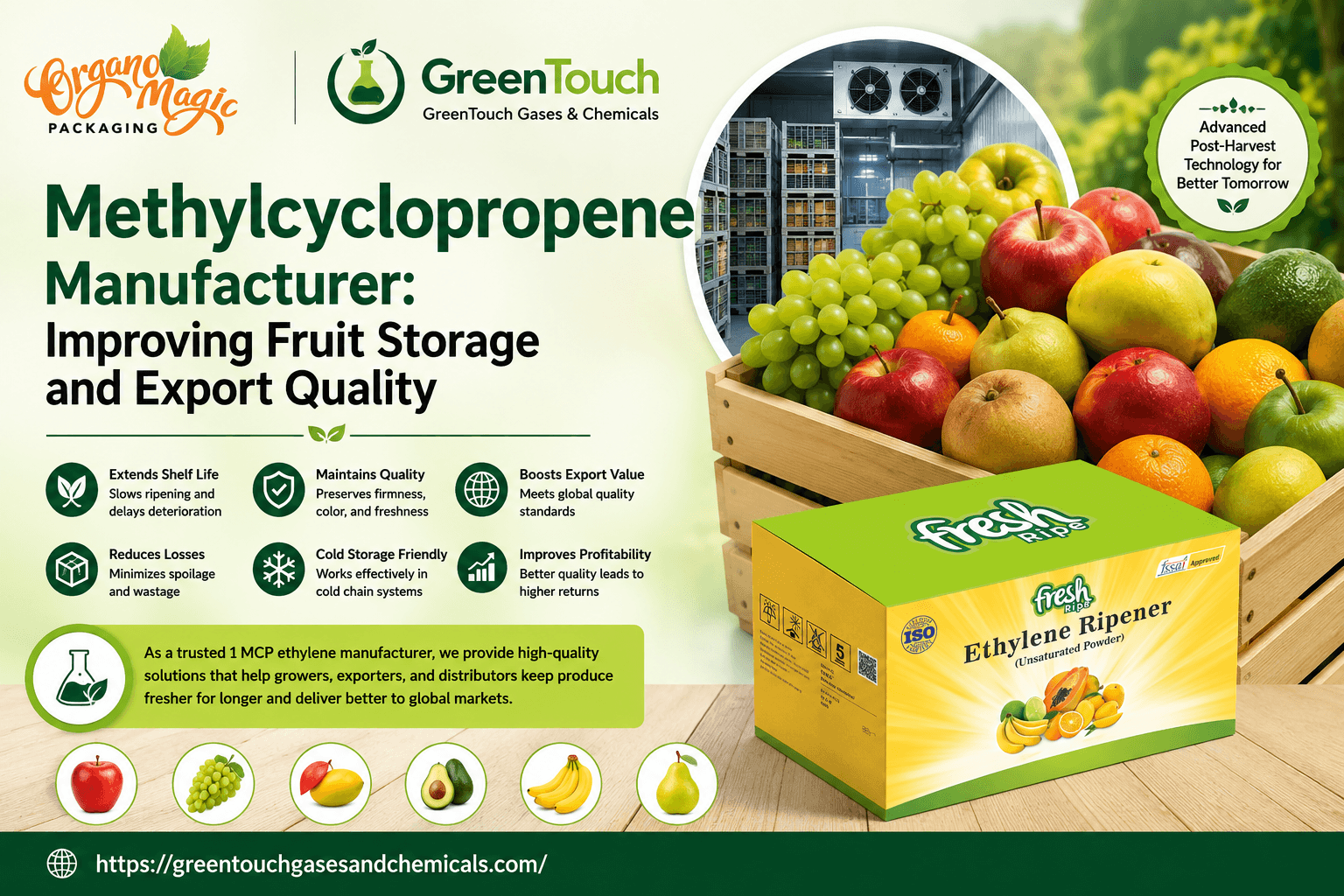
Methylcyclopropene Manufacturer: Improving Fruit Storage and Export Quality
Maintaining freshness after harvest is one of the biggest challenges in the agricultural supply chain. Growers, exporters, and storage facilities continuously look for advanced solutions that extend shelf life while maintaining quality. Choosing a reliable 1 mcp ethylene manufacturer plays an important role in reducing spoilage, preserving appearance, and ensuring produce reaches domestic and international markets in excellent condition. Modern post-harvest technology helps slow natural ripening, allowing produce to remain fresh for longer periods without affecting its nutritional nvalue or market appeal.
Fresh produce continues to breathe even after harvesting, leading to gradual ripening and eventual deterioration. Advanced post-harvest treatments help regulate this natural process, making transportation and long-term storage significantly more efficient. This technology has become increasingly valuable for exporters shipping apples, pears, kiwis, avocados, bananas, and many other crops across long distances.
How Advanced Post-Harvest Technology Enhances Storage and Export Success
Selecting a dependable 1-methylcyclopropene manufacturer is an important decision for businesses involved in agriculture, cold-chain logistics, and export operations. Reliable production standards, consistent formulation, and technical support contribute to better storage outcomes and improved customer satisfaction.
The technology works by slowing the natural ripening process, allowing harvested produce to maintain firmness, texture, flavor, and appearance for extended periods. This creates significant advantages throughout the supply chain.
Key benefits include:
- Extends storage life after harvesting.
- Reduces spoilage during transportation.
- Maintains color, firmness, and texture.
- Minimizes post-harvest losses.
- Supports international export requirements.
- Improves inventory management.
- Helps suppliers deliver higher-quality produce.
- Reduces unnecessary food waste.
- Increases profitability for growers and exporters.
One of the major advantages is better flexibility in logistics. Exporters no longer need to rush shipments immediately after harvest. Instead, they can carefully plan transportation schedules while maintaining product quality throughout storage and distribution.
Another important application is 1 mcp for Fruit Preservation, which has become widely accepted across commercial agriculture. Proper treatment enables produce to remain market-ready for longer durations, giving distributors greater confidence when supplying wholesalers, retailers, and supermarkets.
Different crops respond differently to post-harvest treatments. Apples, pears, plums, persimmons, avocados, and certain vegetables often experience significant improvements in storage performance when handled according to recommended protocols.
Quality control remains equally important. A dependable production partner should maintain strict manufacturing standards, accurate formulation consistency, and comprehensive testing procedures. Certifications, technical documentation, and proper packaging contribute to safe handling and effective application.
Businesses should evaluate several factors before selecting a supplier, including production capacity, research capabilities, technical expertise, and customer support. Experience in serving export-oriented agriculture often indicates a stronger understanding of industry requirements.
Storage conditions also influence overall performance. Temperature management, humidity control, ventilation, and proper harvesting practices work together with post-harvest technology to deliver optimal results. No single solution replaces good agricultural practices; instead, these methods complement each other to maximize quality.
Cold-chain infrastructure has become increasingly important as international trade expands. Produce may travel thousands of kilometers before reaching consumers. During this journey, maintaining freshness directly affects customer satisfaction, retailer confidence, and commercial profitability.
Export markets often have strict quality expectations. Buyers expect consistent size, color, firmness, and freshness upon arrival. Effective post-harvest management helps exporters meet these expectations while reducing rejection rates and minimizing financial losses.
Environmental sustainability is another major benefit. By reducing spoilage throughout the supply chain, businesses waste fewer agricultural resources, including water, fertilizer, labor, packaging, transportation, and energy invested during cultivation. Less waste also contributes to improved food security worldwide.
Research and innovation continue improving post-harvest technologies each year. Manufacturers invest in product development, quality assurance, and improved application methods that simplify usage while delivering reliable performance across different crops and storage conditions.
Training is equally valuable. Professional suppliers often provide technical guidance regarding dosage, application timing, storage recommendations, and safety procedures. Proper implementation ensures consistent results while avoiding unnecessary treatment variations.
As global demand for fresh agricultural products increases, efficient storage solutions will remain essential. Importers and retailers increasingly prioritize suppliers capable of delivering consistent quality over extended shipping distances. Reliable post-harvest technology helps businesses remain competitive in both domestic and international markets.
Whether serving local wholesalers or exporting worldwide, selecting a trusted production partner supports better operational efficiency, stronger customer relationships, and improved long-term profitability. Combining scientific innovation with proper storage management creates a dependable system for maintaining freshness from harvest to final delivery.
Conclusion
Modern post-harvest technology has transformed agricultural storage and export by extending shelf life, reducing waste, and maintaining product quality throughout the supply chain. Businesses that invest in reliable solutions, follow recommended application practices, and maintain proper storage conditions can improve market competitiveness while satisfying growing customer expectations. Before making purchasing decisions, businesses should compare product specifications, technical support, certifications, and 1 methylcyclopropene price in india to identify the most suitable option for their operational requirements.