Ethylene Absorber for Fruits: How It Works and What Buyers Should Know
Choosing the right ethylene absorber supplier is important for businesses involved in fruit packaging, cold storage, transportation, and distribution. Ethylene is a naturally occurring plant hormone that regulates fruit ripening. However, excessive ethylene accumulation during storage can accelerate ripening, soften fruits, and reduce their shelf life.
For fruit exporters, wholesalers, food processing companies, and packaging businesses, controlling ethylene exposure is an important part of post-harvest management. The right technology can help maintain fruit quality and minimise avoidable storage losses.
This article explains how ethylene removal solutions work, where they are used, and what buyers should consider before selecting a reliable supplier.
What Is an Ethylene Absorber for Fruits?
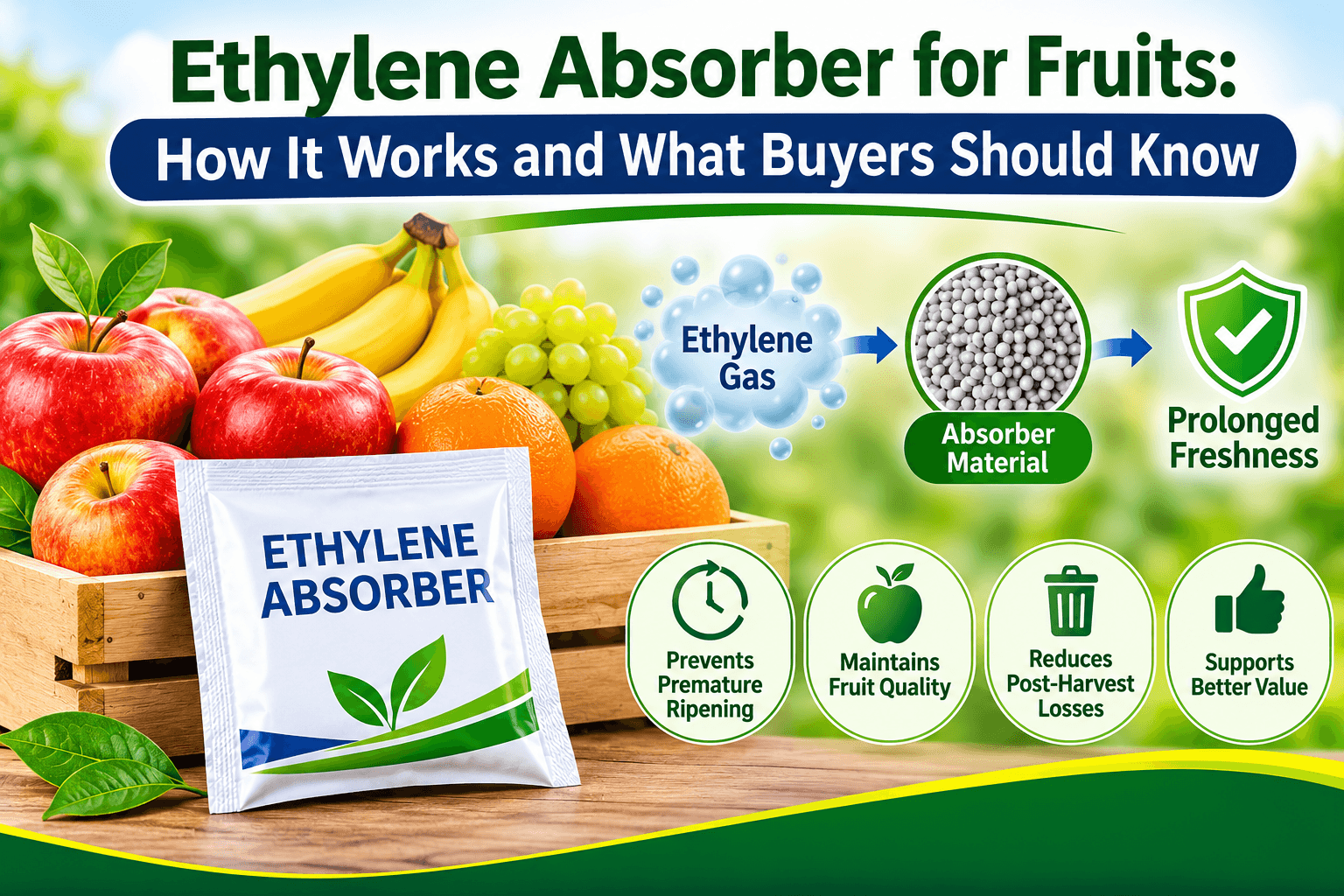
An ethylene absorber is a material or system designed to remove ethylene gas from the environment surrounding fresh produce. It works through chemical oxidation, physical adsorption, or catalytic processes to reduce gas accumulation.
These products are commonly used in fruit packaging, refrigerated storage facilities, transportation containers, and distribution centres to help control premature ripening.
Why Does Ethylene Affect Fruit Freshness?
Ethylene (C₂H₄) is a natural gaseous plant hormone responsible for regulating ripening, ageing, and other physiological processes.
Fruits such as bananas, mangoes, apples, papayas, and avocados produce or respond to ethylene during different stages of development.
Excessive exposure can accelerate several changes:
- Colour development: Green pigments break down as fruits ripen.
- Texture changes: Fruit tissues soften, reducing firmness.
- Sugar development: Starch converts into sugars in certain fruits.
- Aroma formation: Fruits develop characteristic ripening aromas.
- Ageing: Continued exposure can accelerate deterioration.
For example, ripe bananas stored alongside less mature fruits in a poorly ventilated environment may release ethylene that accelerates the ripening of surrounding produce.
Managing this gas is therefore important for businesses that need to maintain consistent fruit quality during storage and transportation.
Why Is Ethylene Management Important During Fruit Storage?
Fruits often travel through several stages before reaching consumers. Improper storage conditions can cause premature ripening and unnecessary post-harvest losses.
Effective ethylene management offers several advantages:
- Controls premature ripening: Helps reduce excessive ethylene exposure during storage.
- Supports product freshness: Helps maintain fruit firmness, appearance, and quality.
- Improves transportation management: Particularly useful during long-distance distribution and export.
- Reduces avoidable wastage: Better storage practices can minimise deterioration.
- Supports inventory management: Businesses can manage ripening more effectively throughout the supply chain.
However, ethylene removal should complement proper refrigeration, humidity control, ventilation, and hygienic handling rather than replace them.
How Does an Ethylene Absorber Work?
An ethylene absorber reduces the concentration of ethylene gas through different removal mechanisms. The effectiveness depends on the technology, active materials, environmental conditions, and product design.
1. Chemical Oxidation
Some products use potassium permanganate (KMnO₄) supported on porous materials. This compound reacts with ethylene and facilitates its oxidation into other substances.
These solutions are commonly available in specially designed sachets, filters, and storage applications.
However, potassium permanganate must remain securely contained and must not come into direct contact with food.
2. Physical Adsorption
Certain porous materials attract and retain ethylene molecules on their surfaces.
Common materials include:
- Activated carbon
- Zeolites
- Selected porous mineral materials
Their performance depends on factors such as surface area, pore structure, temperature, and humidity. Adsorption materials may become saturated over time and require replacement or regeneration.
3. Catalytic Ethylene Removal
Catalytic systems use specialised materials to promote the breakdown of ethylene gas.
Certain metal oxide-based technologies are being explored for this purpose. Their performance depends on catalyst composition, activation requirements, and operating conditions.
Where Are Ethylene Removal Solutions Used?
Ethylene management products are useful across different stages of the fruit supply chain.
Fruit Packaging: Specially designed sachets and packaging materials can help control ethylene inside fruit cartons and packages.
Cold Storage Facilities: Commercial storage facilities may use ethylene scrubbers or filtration systems to manage gas concentrations and reduce exposure.
Fruit Transportation: Refrigerated containers and transportation systems can benefit from appropriate ethylene control during long-distance deliveries.
Wholesale Distribution Centres: Facilities handling multiple fruit varieties can use suitable removal systems to manage ethylene accumulation and protect sensitive produce.
The appropriate solution depends on storage volume, fruit variety, packaging design, and expected storage duration.
What Should Buyers Look for in an Ethylene Absorber Supplier?
Selecting a suitable supplier requires more than comparing product prices. Buyers should evaluate technical performance, safety, manufacturing quality, and long-term supply capabilities.
1. Product Composition
Understand the active materials used in the product. Ask whether the formulation uses potassium permanganate, activated carbon, zeolite, or catalytic technology.
The supplier should explain its working mechanism and handling requirements.
2. Ethylene Removal Capacity
Request technical specifications covering removal capacity, testing conditions, performance duration, and recommended replacement intervals.
Avoid relying on unsupported claims about high absorption efficiency.
3. Packaging and Food Safety
Check whether the active ingredients are securely contained and whether the packaging prevents leakage or accidental contact with fruits.
Review applicable food-contact requirements and safety documentation before commercial use.
4. Consistent Product Quality
Manufacturing consistency is important for businesses purchasing in bulk. Ask about raw material specifications, batch testing, quality assurance, and shelf life.
5. Technical Support
A dependable supplier should provide clear application instructions, storage recommendations, handling precautions, and disposal guidelines.
How to Choose an Ethylene Absorbent Manufacturer
Businesses purchasing at commercial scale should also evaluate the manufacturing capabilities behind the product.
An experienced ethylene absorbent manufacturer should provide technical specifications, explain product formulation, and demonstrate consistent quality control.
Before placing a bulk order, consider the following:
- Request product samples for practical testing.
- Review Safety Data Sheets (SDS), where applicable.
- Check manufacturing and batch quality records.
- Understand recommended application quantities.
- Confirm product shelf life and storage conditions.
- Evaluate regular supply and custom packaging capabilities.
Conducting application trials before large-scale purchasing helps businesses understand whether the product performs effectively under their actual storage conditions.
Food Safety and Regulatory Considerations
Food safety must remain a priority when selecting ethylene removal products.
In India, businesses should review applicable Food Safety and Standards Authority of India (FSSAI) requirements, including the Food Safety and Standards (Packaging) Regulations, 2018, and subsequent amendments, where relevant.
Important precautions include:
- Prevent direct contact between reactive chemical sachets and fruits.
- Check packaging integrity before application.
- Follow manufacturer-recommended storage conditions.
- Review safety documentation and handling instructions.
- Ensure appropriate disposal of used materials.
International buyers should also verify the regulations applicable in their destination markets.
Expert Tips for Effective Ethylene Management
For better results, businesses should follow practical post-harvest management practices.
- Identify fruit requirements: Different varieties produce and respond to ethylene differently.
- Monitor storage conditions: Consider temperature, humidity, ventilation, and storage duration.
- Calculate product quantity: Follow technical recommendations based on storage volume and ethylene load.
- Replace materials when required: Do not assume that removal sachets remain effective indefinitely.
- Maintain cold-chain practices: Combine ethylene management with appropriate refrigeration and sanitation.
Avoid choosing products solely because they are inexpensive. Consider removal performance, replacement frequency, safety, and overall application costs.
Key Takeaways
- Ethylene is a natural hormone that influences fruit ripening and ageing.
- Excessive ethylene exposure can accelerate premature ripening and deterioration.
- Chemical oxidation, physical adsorption, and catalytic systems offer different removal methods.
- Buyers should evaluate product capacity, packaging safety, and manufacturing consistency.
- Proper refrigeration, ventilation, and humidity management remain essential.
Conclusion
Effective ethylene management plays an important role in maintaining fruit quality during packaging, storage, transportation, and distribution. Selecting an appropriate removal solution can help businesses manage premature ripening and minimise avoidable post-harvest losses.
Before purchasing, evaluate product composition, technical performance, safety requirements, and manufacturing reliability. Comparing different suppliers and Top Ethylene Absorber Distributors can help businesses make informed procurement decisions.
For more information about ethylene management products and industrial gas solutions, explore Green Touch Gases and Chemicals at https://greentouchgasesandchemicals.com/.
Understanding the technology and choosing the right product can help businesses develop more efficient and reliable fruit preservation practices.