
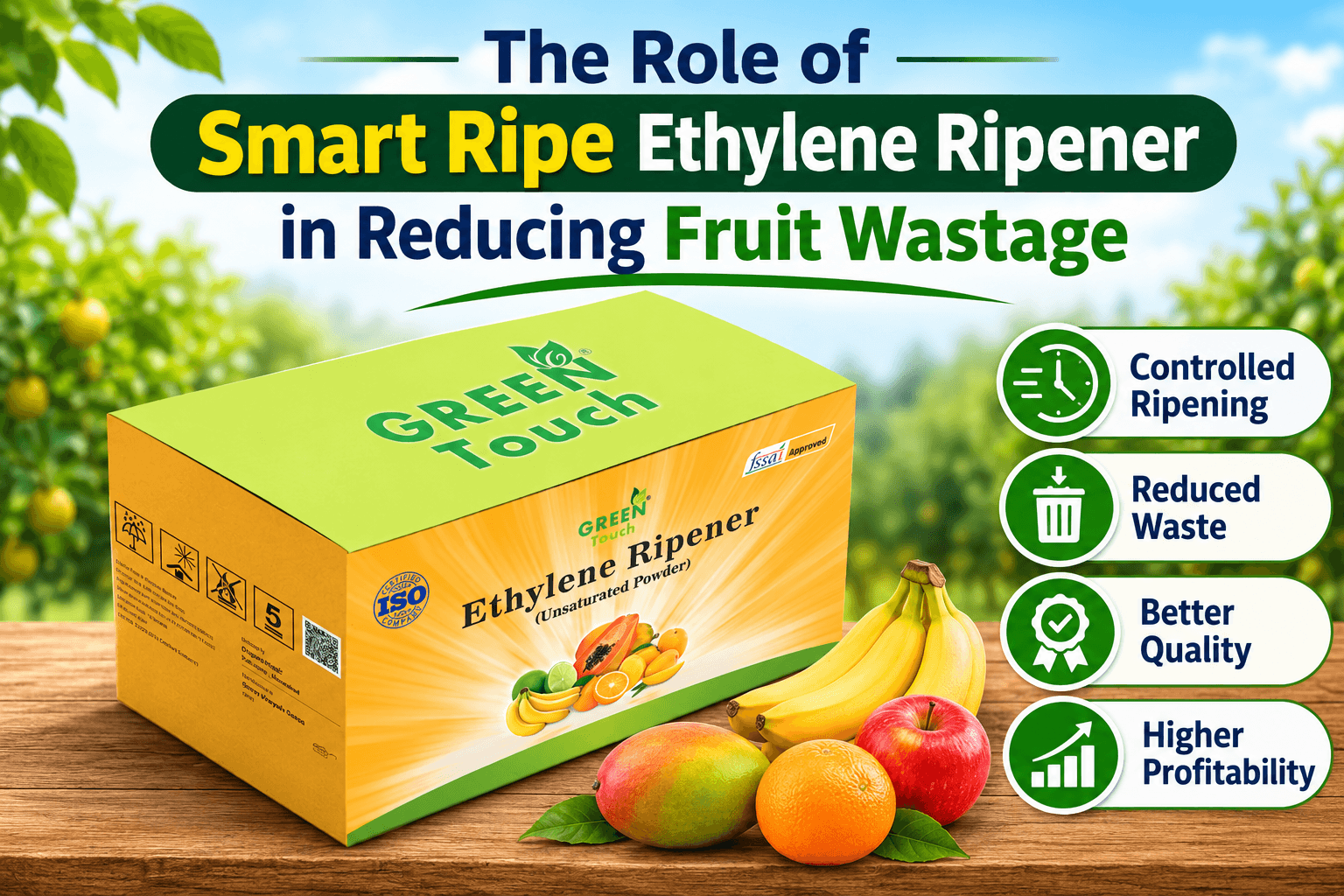
The Role of Smart Ripe Ethylene Ripener in Reducing Fruit Wastage
Fruit wastage is a major challenge in the agricultural and food distribution industries. From harvesting and transportation to storage and retail, fruits can lose their freshness, quality, and market value because of improper handling and uncontrolled ripening. These losses affect farmers, wholesalers, distributors, retailers, and consumers.
Controlled fruit ripening is an effective way to improve post-harvest management. Ethylene, a naturally occurring plant hormone, plays an important role in fruit maturation. When applied under appropriate conditions, it helps coordinate ripening and maintain consistent fruit quality. A Smart Ripe ethylene ripener approach supports better ripening management, reduces avoidable spoilage, and helps businesses deliver fruits at the right stage of maturity.
What Is Ethylene Ripening?
Ethylene is a natural plant hormone responsible for regulating fruit ripening. It influences important changes such as colour development, softening, aroma formation, and flavour.
Fruits such as mangoes, bananas, papayas, and tomatoes are known as climacteric fruits because they continue to ripen after harvesting and naturally produce ethylene.
Commercial fruit ripening facilities use controlled ethylene exposure to manage the maturation process. This allows businesses to prepare fruits for distribution according to market requirements rather than depending entirely on unpredictable natural ripening.
How Does Smart Ripe Ethylene Ripener Help Reduce Fruit Wastage?
Controlled ripening can improve fruit handling and reduce losses throughout the supply chain.
1. Promotes Uniform Fruit Ripening
Uneven ripening is a common problem for fruit wholesalers and distributors. Some fruits may become overripe while others remain immature, making it difficult to maintain consistent quality.
Controlled ethylene exposure helps coordinate the ripening process in suitable fruits. When combined with appropriate temperature, humidity, and ventilation, it supports more uniform maturation.
This allows businesses to manage fruit batches more effectively and supply products with consistent quality.
2. Improves Shelf-Life Management
Improper storage and uncontrolled ripening can accelerate fruit deterioration. Fruits that ripen too quickly may become unsuitable for transportation or retail distribution.
A planned ripening process helps businesses coordinate fruit maturity with delivery schedules. For example, banana wholesalers can prepare different batches according to retailer requirements, reducing the chances of excessive inventory becoming overripe.
Although ethylene does not stop natural deterioration, proper ripening management helps minimise avoidable losses.
3. Reduces Post-Harvest Handling Losses
Fruits pass through several stages before reaching consumers. Poor handling, unsuitable storage, and delayed transportation can result in bruising, spoilage, and quality deterioration.
Organised ripening practices help businesses coordinate harvesting, sorting, storage, packaging, and distribution. Better coordination reduces unnecessary delays and supports efficient post-harvest operations.
Understanding Ethylene Ripener Powder and Its Applications
Businesses may encounter products marketed as ethylene ripener powder for commercial fruit-ripening applications. However, not every ripening powder uses the same ingredients or technology.
Ethylene itself is a gas, and commercial ripening facilities commonly use approved ethylene gas systems with suitable concentration monitoring and ventilation.
Before selecting any powder-based product, businesses should:
- Verify its chemical composition and active ingredients.
- Check manufacturer documentation and product specifications.
- Confirm its suitability for food-related applications.
- Review applicable FSSAI requirements.
- Avoid products with unclear ingredients or unsupported safety claims.
Calcium carbide must not be used for artificial fruit ripening in India because its use for this purpose is prohibited under food safety regulations.
How Does Controlled Ripening Improve Mango Quality?
Mangoes are commercially important fruits that require careful post-harvest management. Improper ripening can affect their colour, texture, flavour, and market value.
The use of mango ripening powder should be evaluated carefully because product composition and regulatory suitability can vary. Businesses should prioritise approved and food-safe ripening technologies.
Several factors influence successful mango ripening:
Harvest maturity: Mangoes should be harvested at the appropriate physiological maturity. Immature fruits may not develop proper flavour and texture.
Temperature management: Suitable temperatures help maintain normal ripening. Excessive heat or inappropriate storage conditions can damage fruit quality.
Proper ventilation: Adequate airflow supports consistent chamber conditions and prevents unwanted gas accumulation.
Regular inspection: Checking colour, firmness, and signs of spoilage helps operators identify fruits that are ready for distribution.
These practices help businesses maintain better quality while reducing unnecessary losses.
Important Factors for Effective Fruit Ripening
Using an appropriate ripening method is only one part of successful post-harvest management. Businesses should consider several operational factors.
- Fruit variety: Different fruits have different ripening requirements and should be managed accordingly.
- Temperature and humidity: Both influence ripening speed, moisture retention, and fruit quality.
- Ethylene concentration: Commercial applications should follow suitable technical guidance and prescribed conditions.
- Storage facilities: Clean, hygienic storage areas help prevent contamination and deterioration.
- Staff training: Employees should understand chamber operations, fruit handling, and quality inspection.
- Market demand: Ripening schedules should match transportation timelines and customer requirements.
Best Practices for Reducing Fruit Wastage
Businesses can improve fruit quality and minimise post-harvest losses by following a systematic approach.
- Harvest fruits at the correct maturity stage.
- Separate damaged and diseased fruits before storage.
- Maintain clean and hygienic ripening chambers.
- Monitor temperature, humidity, and ethylene concentration.
- Ensure proper ventilation and airflow.
- Avoid overcrowding ripening chambers.
- Inspect fruit batches regularly.
- Coordinate ripening with transportation and market demand.
- Maintain records of storage and ripening conditions.
- Use only approved and food-safe ripening methods.
Regulatory Considerations in India
Food safety must remain a priority when selecting fruit-ripening technologies. The Food Safety and Standards Authority of India (FSSAI) regulates food safety practices and provides requirements concerning artificial fruit ripening.
Ethylene gas is permitted for artificial ripening subject to applicable conditions and prescribed limits. Calcium carbide is prohibited for this purpose. Businesses should consult the latest FSSAI regulations and official guidance before adopting commercial ripening products or technologies.
Common Mistakes That Increase Fruit Wastage
Even modern ripening facilities can experience losses because of poor operational practices.
Common mistakes include using unsuitable chemicals, harvesting immature fruits, ignoring temperature requirements, overcrowding chambers, maintaining inadequate ventilation, and delaying transportation after ripening.
Regular monitoring, proper employee training, and planned distribution can help businesses avoid these problems and maintain consistent fruit quality.
Conclusion
Reducing fruit wastage requires effective harvesting, storage, ripening, and distribution practices. Controlled ethylene application provides a practical way to manage fruit maturity, improve consistency, and minimise avoidable post-harvest losses.
However, successful results depend on maintaining appropriate temperature, humidity, ventilation, hygiene, and regulatory compliance.
Adopting reliable Smart Ethylene Solutions for Fruit Ripening can help farmers, wholesalers, and fruit distributors improve operational efficiency while maintaining food safety and product quality. Understanding the role of Smart Ripe ethylene ripener is an important step towards building a more organised and sustainable fruit supply chain.