
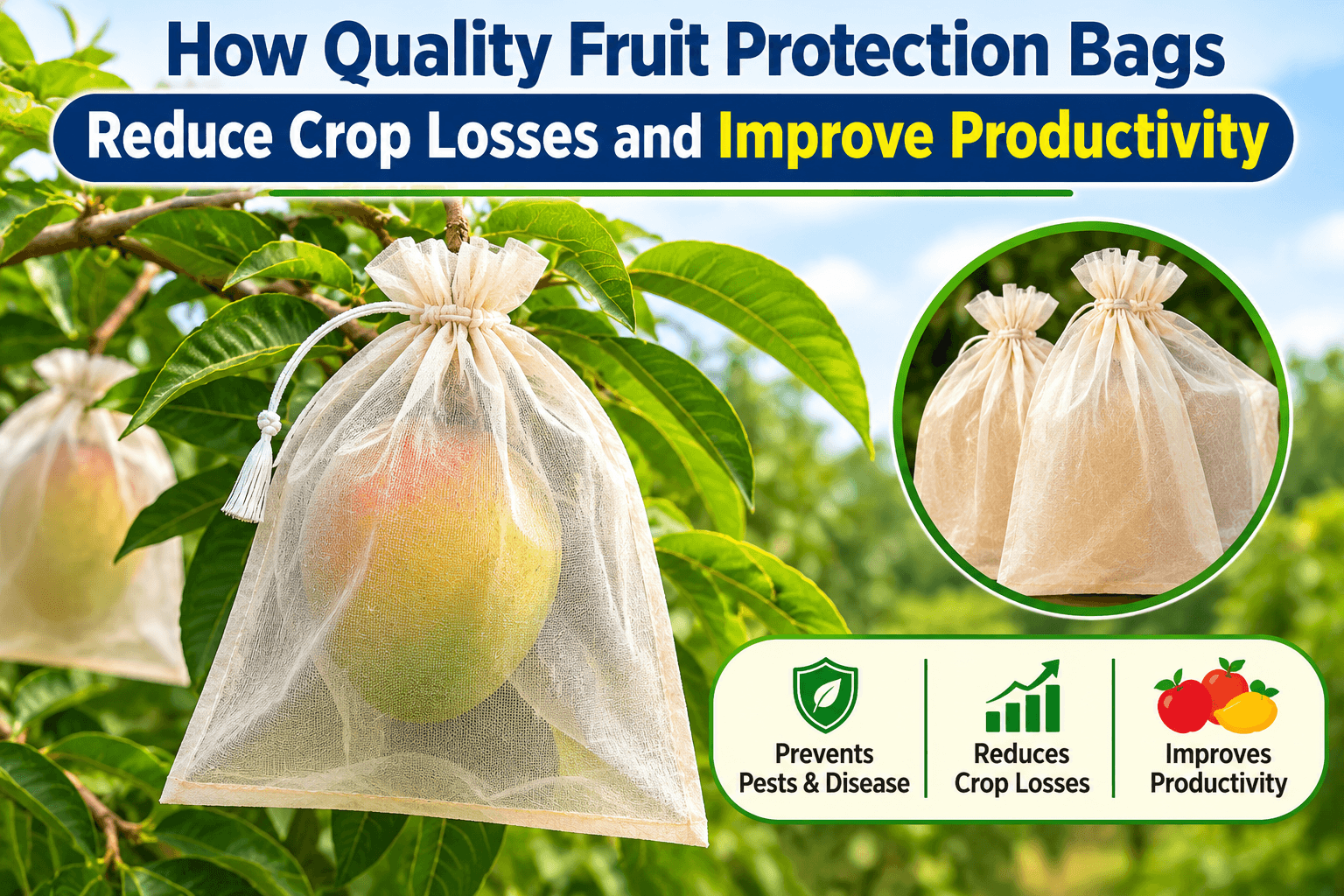
How Quality Fruit Protection Bags Reduce Crop Losses and Improve Productivity
Fruit cultivation requires proper care throughout every stage of development, from flowering to harvesting. During this period, fruits are exposed to insects, birds, dust, excessive sunlight, fungal infections and physical damage. These problems can affect fruit quality, reduce marketable production and increase farming costs.
One effective way to minimise external damage is by using quality fruit protection bags. These covers create a protective barrier around developing fruits, helping farmers maintain better appearance and reduce certain pest-related losses. Choosing the right material and design is equally important. An experienced Fruit Protection Bag Manufacturer can help growers identify suitable products for different fruit varieties and agricultural conditions.
This article explores how fruit protection bags work, their benefits and the best practices for improving orchard productivity.
How Do Fruit Protection Bags Reduce Crop Losses?
Fruit protection bags reduce crop losses by covering developing fruits and protecting them from insects, birds, dust, scratches and excessive sunlight. Suitable covers help maintain external fruit quality, reduce certain pest-related problems and improve marketability. When installed correctly, they support better orchard management and more consistent harvesting results.
What Are Fruit Protection Bags?
Fruit protection bags are specially designed covers placed around developing fruits while they remain attached to trees or plants. They are generally manufactured using paper, non-woven fabric and other breathable agricultural materials.
Their primary purpose is to create a physical barrier against external factors that can damage fruits during development.
Depending on their material and design, these covers can help protect against:
- Insect and pest attacks.
- Bird damage and surface scratches.
- Dust and external contamination.
- Excessive direct sunlight.
- Minor weather-related damage.
- Certain external sources of fungal contamination.
Different fruits require different protection methods. Mangoes, guavas, apples and pomegranates may need different bag sizes, material strengths and ventilation arrangements.
Why Are Quality Fruit Protection Bags Important for Farmers?
Using protective covers is not just about preventing visible fruit damage. It also helps farmers maintain product quality and manage orchard operations more effectively.
1. Protection Against Insects and Pests
Insects can damage fruits during important growth stages. Some pests lay eggs on fruit surfaces, while others feed on developing fruit and create marks that reduce commercial value.
Properly installed protective bags create a physical barrier that can reduce direct exposure to selected pests. However, they should be combined with regular orchard inspections and integrated pest management practices.
2. Better Fruit Appearance and Marketability
Fruit appearance plays an important role in consumer preference and market acceptance. Scratches, insect marks and dust accumulation can affect the appearance of harvested produce.
Quality covers help minimise several external sources of damage. This can result in cleaner and more uniform-looking fruits, making them more suitable for retail markets, wholesalers and premium buyers.
3. Reduced Environmental Exposure
Excessive sunlight, wind-driven dust and physical contact can affect fruit surfaces. Suitable protective covers help reduce exposure to these conditions.
Breathability is particularly important because poor ventilation can cause moisture accumulation and increase the risk of fungal problems.
4. Improved Harvest Quality
Fruit protection bags help maintain external fruit quality throughout the growing period. This can be valuable for farmers supplying supermarkets, exporters and organised agricultural markets.
However, overall fruit quality also depends on harvesting maturity, handling, storage conditions and post-harvest management.
How Does a Fruit Protection Bag Supplier Support Better Crop Management?
Selecting the right protective material requires more than comparing product prices. A reliable Fruit Protection Bag Supplier should understand the requirements of different fruit varieties and growing environments.
Before purchasing, farmers should consider the following factors:
- Material quality: The material should withstand outdoor conditions during the required protection period.
- Breathability: Adequate airflow helps manage moisture and temperature.
- Size and fitting: The cover should accommodate fruit growth without creating unnecessary pressure.
- Durability: Strong construction helps reduce premature tearing.
- Light transmission: The material should provide suitable light exposure for the selected crop.
- Easy installation: Convenient designs can reduce labour requirements in larger orchards.
Choosing products with appropriate specifications can help farmers improve protection and manage agricultural expenses.
Which Types of Fruit Protection Bags Are Commonly Used?
Different materials offer different protection benefits. Their suitability depends on fruit variety, climate and orchard conditions.
Paper Fruit Protection Bags
Paper covers are commonly used for selected orchard fruits. They provide a physical barrier against insects, dust and surface damage. Their effectiveness depends on paper strength, moisture resistance and ventilation.
Non-Woven Fruit Protection Bags
Non-woven covers are lightweight and can provide a balance between physical protection and airflow. They are useful for agricultural applications where breathable materials are required.
Specialised Agricultural Covers
Some fruits require customised dimensions, closure systems and material properties. Specialised covers can be selected according to fruit size, development stage and environmental conditions.
Why Are Mango Covers Important for Fruit Quality?
Mangoes are exposed to several external risks during development, including insect attacks, bird damage, sunburn and surface scratches. These problems can affect their appearance and commercial value.
Using suitable mango covers can help reduce exposure to these conditions.
Important benefits include:
- Reducing access by certain insects.
- Minimising surface scratches and physical damage.
- Limiting direct exposure to dust.
- Reducing excessive sunlight exposure with suitable materials.
- Supporting better external fruit appearance.
Farmers can explore crop-specific options from an experienced mango covers manufacturer. The selected covers should provide adequate ventilation, accommodate fruit growth and remain securely fitted.
However, protective covers are not a replacement for orchard sanitation, pruning, pest monitoring or integrated pest management.
How to Choose the Right Fruit Protection Bag Manufacturer
Selecting the right manufacturer is important for maintaining consistent product quality and effective crop protection.
Consider these factors before making a purchasing decision:
- Check material quality: Choose agricultural-grade materials suitable for outdoor use.
- Evaluate ventilation: Ensure the design allows adequate airflow and moisture management.
- Look for customised sizes: Different fruit varieties require different dimensions.
- Assess production capacity: Bulk requirements should be supported by consistent manufacturing and timely delivery.
- Ask about quality testing: Check material specifications, durability and relevant safety documentation.
- Compare long-term value: Consider purchase costs, installation labour and replacement requirements.
Testing a small quantity under actual orchard conditions before purchasing in bulk is a practical approach.
Best Practices for Using Fruit Protection Bags
Proper installation and regular monitoring are essential for achieving better results.
Farmers should follow these practices:
- Select healthy fruits without visible disease or pest damage.
- Install covers at the recommended fruit development stage.
- Use the correct size to avoid restricting fruit growth.
- Secure covers without damaging stems or branches.
- Inspect regularly for moisture accumulation and material damage.
- Remove covers according to crop-specific harvesting recommendations.
- Follow local horticultural guidance for pest and disease management.
In India, farmers can consult the Indian Council of Agricultural Research (ICAR), state horticulture departments and the Ministry of Agriculture and Farmers Welfare for relevant agricultural guidance.
Key Takeaways
- Fruit protection bags help reduce damage from insects, birds, dust and environmental exposure.
- Suitable covers can improve fruit appearance and marketability.
- Material quality, ventilation and correct sizing are essential.
- Mango covers provide crop-specific protection during fruit development.
- Proper installation and regular inspection improve effectiveness.
- Testing products before bulk purchasing helps farmers make informed decisions.
Conclusion
Quality fruit protection bags are a practical solution for farmers looking to reduce crop losses, maintain fruit appearance and improve orchard productivity. Selecting suitable materials, ensuring proper ventilation and applying covers at the correct growth stage are essential for achieving better results.
Working with a reliable Fruit Protection Bag Manufacturer helps farmers access suitable products for different fruit varieties and agricultural requirements. When evaluating a Top Fruit Protection Bag Manufacturer, consider product durability, material safety, customisation and long-term value rather than focusing only on purchase price.
Farmers and agricultural businesses can explore specialised fruit protection solutions from https://greentouchgasesandchemicals.com/ to identify suitable products for their cultivation needs.